
Intramuscular (IM) injection delivers an absolute bioavailability of 93%. This ensures rapid systemic circulation within 1 to 5 minutes. Conversely, Intranasal (IN) administration offers a needleless 45% to 50% bioavailability. This reduction occurs due to mucous membrane absorption limits and aerosol loss. This makes it an excellent option for gentler, titratable therapeutic sessions. This baseline physiological difference dictates how the solution breaks down across distinct metabolic phases.
The Pharmacokinetic Deep-Dive (The Alpha vs. Beta Phase)
Clinicians analyze a standard open two-compartment pharmacokinetic model to master how a pure liquid formula behaves in the human body. When introduced into systemic circulation, its clearance rate does not follow a simple, single-stage linear decline. Instead, the compound exhibits a stark biphasic decline curve. This curve separates its immediate, acute psychoactive properties from its long-term systemic clearance and hepatic elimination.
Understanding the boundaries between the Alpha Distribution Phase and the Beta Elimination Phase is critical for designing effective clinical protocols. This understanding also ensures optimal patient safety.
The Alpha Distribution Phase (The 10-to-15 Minute Window)
The alpha phase describes the rapid movement of the compound from the central venous system into highly vascularized, high-blood-flow organs. Specifically, it crosses the blood-brain barrier. Ketamine Hydrochloride features exceptionally high lipid solubility and low plasma protein binding, averaging only 12% to 15%. Because of these molecular characteristics, the parent drug experiences virtually no structural resistance as it diffuses out of the central blood compartment. It then quickly saturates the lipid-dense tissues of the central nervous system.
During this initial 10-to-15 minute window, the drug rapidly saturates central N-methyl-D-aspartate (NMDA) receptor complexes. This intensive receptor binding triggers the acute dissociative states, psychedelic visual architectures, and transient anesthetic effects characteristic of the substance.
As plasma levels drop due to rapid tissue uptake, the concentration gradient shifts. The drug begins to redistribute down its concentration gradient away from the brain. It moves into less vascularized somatic structures, such as skeletal muscle tissue and adipose tissue. The completion of this redistribution process marks the formal conclusion of the primary psychoactive window.
The Beta Elimination Phase
Once equilibrium is achieved between the central venous compartment and the peripheral tissue compartments, the beta phase takes over. This phase dictates how the body clears the remaining compound. Ketamine features an exceptionally rapid systemic clearance rate, averaging between 12 and 17 mL/min/kg in healthy adult populations. This rapid clearance is driven almost entirely by high-extraction hepatic metabolism. This means the liver processes the drug efficiently as blood circulates through the portal system.
The definitive elimination half-life of the parent compound spans roughly 2 to 3 hours. During this phase, plasma levels drop at a stable, predictable, logarithmic rate. This rapid elimination ensures that a single clinical dose remains a highly predictable, time-bound experience.
Unlike other psychoactive substances that linger in peripheral lipid compartments for days, the beta phase ensures rapid clearance. The primary active compound is systematically cleared from the body within a narrow chronological window, preventing cumulative toxicity during sequential therapeutic protocols.
Intramuscular (IM) Injection: The Rapid Induction Standard
Administering a high-purity liquid solution directly into deep skeletal muscle tissue provides a fast induction route. It avoids early biological barriers, serving as a highly predictable delivery standard in modern anesthesia and clinical psychiatry.
The 93% Metric
The absolute bioavailability of an IM injection reaches a reliable 93%. Because skeletal muscle tissue—specifically the deltoid or gluteus maximus—is profoundly vascularized, the liquid solution enters the capillary beds and systemic bloodstream rapidly. This rapid absorption allows the compound to achieve peak plasma concentration within a tight 5 to 15 minute window following administration.
Because virtually the entire administered dose reaches systemic circulation intact, clinicians can use a significantly lower total milligram dose. This achieves identical plasma saturation and NMDA receptor occupancy compared to oral, sublingual, or intranasal applications. This high efficiency removes the clinical guesswork caused by unpredictable absorption rates. It ensures that the patient receives an exact, reproducible therapeutic exposure every single session.
Metabolic Profile
A primary kinetic advantage of the IM route is that the initial dose entirely bypasses first-pass liver metabolism. The solution enters systemic circulation through muscle capillaries. It interacts directly with central receptors before passing through hepatic pathways. This direct pathway protects the parent compound during the critical distribution phase. This keeps the ratio of parent ketamine to its weaker metabolite, norketamine, heavily skewed toward ketamine.
Because the parent drug has a vastly superior binding affinity for NMDA receptors compared to its metabolites, keeping this ratio high ensures clean, unadulterated receptor saturation. This optimization minimizes initial metabolic interference. It allows for a precise correlation between the administered dose and the patient’s subjective clinical response. Detailed clinical data regarding these specific baseline metrics can be found in the Wikipedia: Ketamine Pharmacokinetic Data & Bioavailability Matrix.
Intranasal (IN) Spray: The Needleless Titration Option
Using a fine mechanical atomizer to deliver a liquid solution through the nasal cavity offers a non-invasive, needleless approach. While highly accessible and preferred for at-home or step-down therapeutic applications, it introduces specific physical barriers that fundamentally alter the pharmacokinetic profile.
The Absorption Barrier
The absolute bioavailability of intranasal sprays sits consistently between 45% and 50%. This lower efficiency is caused by several structural and mechanical factors:
- Droplet Size and Aerosol Loss: Inconsistent droplet generation from standard atomizer pumps causes larger liquid particles to pool in the nasal vestibule. They do not mist evenly across the respiratory epithelium, leading to localized mechanical waste.
- Mucosal Tissue Conditions: Localized inflammation, allergies, vasoconstriction, or active congestion alter epithelial permeability. This makes absorption rates less predictable from day to day.
- Anatomical Runoff: Excess liquid volume often overrides the natural surface tension of the mucous membranes. This causes it to run down the nasopharynx directly into the throat. Once swallowed, this portion is subjected to first-pass liver metabolism. It drops to a low 17% oral bioavailability and creates delayed, uneven secondary plasma levels.
The Olfactory Pathway
A distinct property of intranasal delivery is direct nose-to-brain transport along the olfactory mucosa. Olfactory receptor neurons travel through the cribriform plate of the ethmoid bone. This provides a physical link between the external environment and the internal central nervous system.
A small percentage of the atomized solution travels along these perineural spaces. This pathway bypasses the systemic bloodstream and the blood-brain barrier entirely. The compound enters the cerebrospinal fluid directly. This specialized pathway provides a direct route to central receptors. It contributes to a smooth, highly titratable therapeutic induction that softens the psychological impact of the initial peak.
Product Spotlight: Harnessing Ketamine HCl Solution
Compounding Versatility
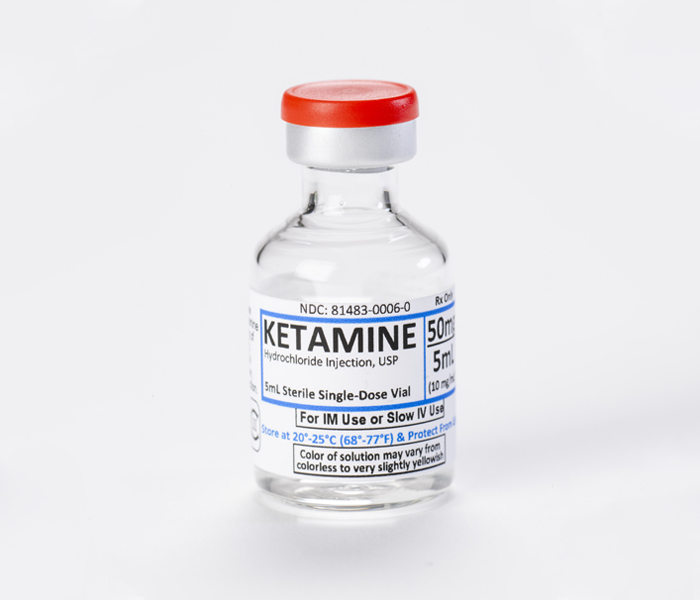
A pure, high-grade KETAMINE HYDROCHLORIDE SOLUTION provides maximum versatility for medical compounding. Because it contains no dense binders, stabilizing starches, or artificial fillers, it can be utilized natively for precise intramuscular injection protocols in a clinical setting.
Alternatively, the exact same liquid format can be accurately diluted into fine-atomizer nasal spray devices. It can also be processed into specialized sublingual KETAMINE TROCHES to support non-invasive, step-down therapeutic applications.
Dosing Calibration
Because bioavailability differs sharply between delivery methods, doses do not translate on a 1:1 milligram basis. A 50mg IM dose at 93% bioavailability delivers roughly 46.5mg of active compound straight into systemic circulation. This causes a sharp, rapid peak plasma concentration.
Conversely, a 100mg IN dose at 45% bioavailability delivers roughly 45mg to the bloodstream. However, because absorption happens gradually across the nasal lining and suffers from aerosol loss, it produces a lower, flatter, and more gradual plasma curve. This explains why a 100mg nasal spray yields a gentler, more extended experience than a 50mg IM injection, despite delivering a comparable total milligram volume to the bloodstream.
Safety, pH, and Mucosal Protection
When converting a liquid solution into an accurate nasal spray, maintaining a strict pH balance is vital for harm reduction. The natural pH of human nasal mucosa ranges between 5.5 and 6.5. Standard liquid formulas are naturally quite acidic, typically carrying a pH between 3.5 and 5.5 to remain stable in long-term storage.
If introduced to nasal tissue unbuffered, this acidity causes severe burning, localized inflammation, and chronic cellular irritation. Advanced compounding utilizes phosphate or citrate buffers to shift the spray closer to a physiological pH. This protects delicate mucosal linings and preserves long-term olfactory health. Individual genetics determine how aggressively your liver processes these clinical compounds. To better understand your body’s processing times, consult Pharmacogenomics & Psychedelics: Using DNA Testing to Predict Your Experience in 2026 to map your individual metabolic pathways before starting a heavy dosing regimen.
Pharmacogenomics & Psychedelics: Liver Enzyme Clearance Variations
Once a compound enters systemic circulation, it undergoes extensive biotransformation in the liver via the cytochrome P450 enzyme matrix. This process breaks down the parent compound into active and inactive secondary metabolites. The initial step is N-demethylation, which converts the drug into its primary metabolite, norketamine, driven chiefly by the CYP2B6 and CYP3A4 isoenzymes. Because metabolic clearance depends entirely on these specific enzymes, genetic variations alter how long the drug remains active.
A poor metabolizer clears the parent compound slowly, causing prolonged psychoactive effects. Conversely, an ultra-rapid metabolizer converts the parent drug into norketamine almost instantly. This process shortens the acute experience and alters the therapeutic curve. More on these clearance variations can be reviewed at the PMC: Population Pharmacokinetics of Intramuscular and Intravenous Ketamine.
FAQ
Why is IM ketamine more efficient than nasal spray?
IM delivery avoids the physical barriers of the nasal cavity, such as aerosol bounce, localized mucosal congestion, and nasopharyngeal runoff. Injecting a liquid solution directly into vascularized muscle tissue yields a stable 93% absolute bioavailability compared to the variable 45% to 50% seen with intranasal sprays. This allows for lower doses and superior predictability.
How long does it take for IM ketamine to kick in?
Because it bypasses surface epithelial membranes and enters deep systemic circulation directly, the acute effects of an IM injection manifest within 1 to 5 minutes. Peak plasma concentration and maximum dissociation occur within 5 to 15 minutes, matching the completion of the alpha distribution phase.
Can I turn liquid ketamine solution into a nasal spray?
Yes, a pure liquid solution can be adapted into an intranasal spray, but it must be handled through proper compounding channels. Raw injection solutions are highly acidic to remain shelf-stable. They require precise buffering to align with the natural pH of the nasal mucosa (5.5 to 6.5) to avoid localized burning, tissue irritation, and mucosal damage.
What role does Norketamine play in antidepressant effects?
Norketamine and its downstream metabolite, (2R,6R)-hydroxynorketamine (HNK), are primary drivers of sustained neuroplasticity. While the parent compound causes the immediate dissociation felt during a session, these secondary metabolites circulate for hours afterward. This stimulates AMPA receptors and triggers the release of brain-derived neurotrophic factor (BDNF) to repair neural pathways.
Conclusion
Ketamine Hydrochloride Solution remains the definitive pharmaceutical benchmark for engineering rapid, predictable neuroplasticity and profound clinical breakthrough velocity. By commanding the underlying pharmacokinetics of the alpha distribution and beta elimination phases, practitioners can strip away systemic variables and construct flawless, reproducible therapeutic settings. Whether optimizing for the direct, high-saturation 93% efficiency of an intramuscular protocol or leveraging the smooth, needleless, nose-to-brain pathway of an atomized mucosal spray, masterfully balancing the delivery chemistry is what separates an erratic session from a profoundly successful clinical outcome.
Experience the Peak of Dissociative Purity
Are you ready to purchase premium clinical compounds? You can buy the highest-grade KETAMINE HYDROCHLORIDE SOLUTION on our platform to experience unmatched induction speed and 93% absolute bioavailability. If your protocol requires a slow-release, adjustable application, you can buy our precision KETAMINE TROCHES online today. We provide the uncompromised laboratory standards your research demands. Buy directly from our secure inventory at Psychedelic Sphere to guarantee absolute product verification, explore our elite molecular archives, and secure complete compound integrity today.