
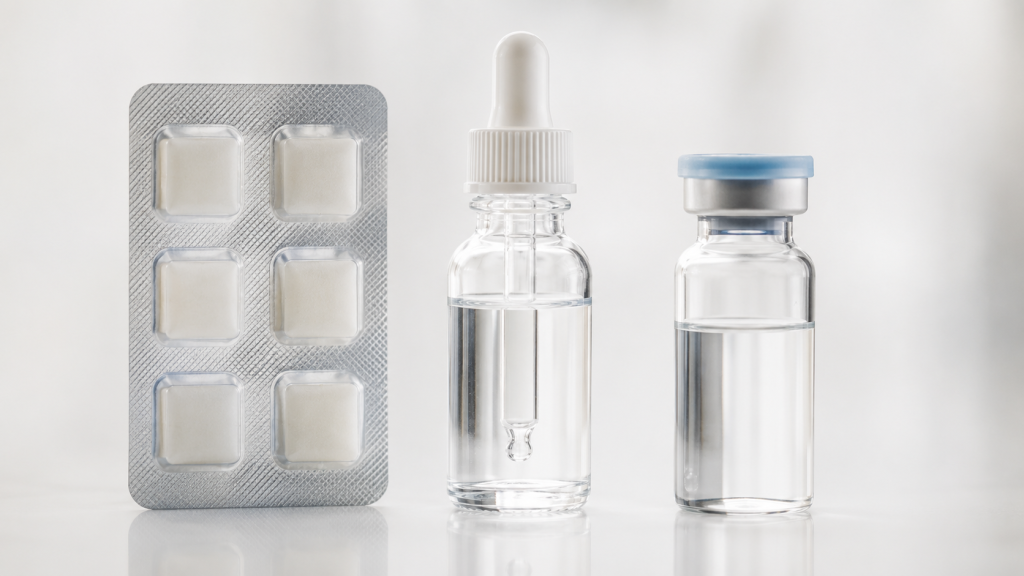
When researching modern psychedelic medicine and clinical administration, understanding ketamine formulations troches powder solution differences is vital. Ketamine is a versatile arylcyclohexylamine compound utilized across various medical disciplines. Furthermore, its therapeutic application spans from surgical anesthesia and emergency medicine to low-dose psychiatric treatment for treatment-resistant depression.
However, the specific delivery method chosen drastically changes how the body absorbs, metabolizes, and experiences the compound. Indeed, bioavailability, onset time, duration, and clinical setting vary dramatically between sublingual troches, raw powder, and pharmaceutical solutions.
Therefore, this comprehensive reference guide breaks down everything you need to know about ketamine formulations troches powder solution characteristics. Specifically, we will explore clinical pharmacology, metabolic pathways, administration routes, safety profiles, therapeutic applications, and long-term integration frameworks.
1. Pharmacology and Metabolic Pathways of Ketamine
To understand why different formulations yield distinct experiences, we must first examine how ketamine interacts with human central nervous system pathways.
NMDA Receptor Antagonism and Glutamate Surge
Ketamine functions primarily as a non-competitive antagonist at the N-methyl-D-aspartate (NMDA) receptor site. In standard neurobiology, NMDA receptors bind glutamate, which is the principal excitatory neurotransmitter in the brain.
When ketamine selectively blocks NMDA receptors on GABAergic interneurons, it produces a sudden release of glutamate. Consequently, this glutamate surge stimulates secondary alpha-amino-3-hydroxy-5-methyl-4-isoxazolepropionic acid (AMPA) receptors.
As a result, this AMPA activation triggers downstream cascades that elevate Brain-Derived Neurotrophic Factor (BDNF). Subsequently, increased BDNF levels stimulate mammalian target of rapamycin (mTOR) pathways, thereby promoting rapid synaptogenesis and neural repair.
Additionally, to learn more about how neuroplasticity drives long-term healing, review our foundational guide on Psychedelics and Neuroplasticity.
First-Pass Hepatic Metabolism vs. Direct Absorption
The route of administration dictates whether ketamine undergoes first-pass liver metabolism before reaching systemic circulation:
- Oral and Sublingual Routes: When absorbed through mucosal membranes or swallowed, Ketamine Troches enter the portal vein directly to the liver. There, CYP3A4 and CYP2B6 enzymes metabolize ketamine into its primary active metabolite, norketamine. Although norketamine delivers sedating, analgesic effects, it possesses significantly weaker NMDA receptor affinity than parent ketamine.
- Parenteral Routes (IV, IM, and Nasal): In contrast, injected or vaporized liquid formulations like Ketamine Hydrochloride Solution bypass hepatic first-pass metabolism entirely. Because of this direct absorption, parent ketamine enters the bloodstream immediately, which produces higher peak brain concentrations, rapid dissociation, and heightened neuroplastic response windows.
2. In-Depth Breakdown of Ketamine Formulations
Comparing ketamine formulations troches powder solution options requires evaluating their physical composition, absorption profiles, and clinical settings.
1. Sublingual Troches and Rapid-Dissolve Tablets (RDTs)
Sublingual Ketamine Troches are compounding pharmacy preparations composed of active ketamine suspended in a wax, gelatin, or polyglycol base. Specifically, patients place the troche under the tongue or between the cheek and gum, allowing it to dissolve slowly over 10 to 15 minutes.
- Bioavailability Profile: Sublingual administration yields a bioavailability range of approximately 24% to 30%. Consequently, absorption occurs directly through oral mucosal blood vessels, thereby bypassing initial liver destruction.
- Onset and Duration: Typically, effects begin within 10 to 20 minutes, reaching peak intensity around 30 to 45 minutes. Furthermore, the full active duration lasts between 90 minutes and 2 hours.
- Clinical Context: Most commonly, troches serve as the primary delivery vehicle for at-home psychedelic-assisted psychotherapy (KAP) and maintenance dosing routines.
2. Pharmacological Solutions (Intravenous, Intramuscular, and Subcutaneous)
Pharmaceutical Ketamine Hydrochloride Solution preparations consist of pure ketamine hydrochloride dissolved in sterile, isotonic saline or water for injection. As a result, this formulation remains the gold standard in clinical, hospital, and clinical trial environments.
- Bioavailability Profile: Intravenous (IV) infusions provide 100% systemic bioavailability. Meanwhile, Intramuscular (IM) injections yield an impressive 93% bioavailability.
- Onset and Duration: Because IV administration produces instantaneous effects, clinicians can titrate dosage in real time. In comparison, IM injections take effect within 3 to 5 minutes, peaking rapidly and lasting approximately 45 to 60 minutes.
- Clinical Context: Generally, in-clinic IV infusions and IM injections are utilized for acute suicidal ideation, severe treatment-resistant depression, chronic pain syndromes, and deep psychedelic KAP protocols.
3. Crystalline Powder and Nasal Formulations
In raw chemical form, Ketamine Powder represents pure crystalline ketamine hydrochloride. In clinical pharmacology, purified powder is reconstituted into sterile liquid solutions or processed into precise intranasal sprays.
- Bioavailability Profile: Intranasal mucosal absorption provides a bioavailability of roughly 45% to 50%, which places it midway between sublingual troches and parenteral solutions.
- Onset and Duration: Because intranasal absorption acts rapidly, onset occurs within 5 to 10 minutes and peak effects last 30 to 45 minutes.
- Clinical Context: For instance, FDA-approved Esketamine (Spravato) utilizes a pre-calibrated nasal spray device administered in certified medical clinics for treatment-resistant depression.
3. Comparative Breakdown: Troches vs. Powder vs. Solution
To help you compare ketamine formulations troches powder solution characteristics clearly, review these point-by-point differences:
Bioavailability Rates
- Sublingual Troches: Initially, troche preparations yield 24% to 30% systemic absorption through oral mucosal membranes when using Ketamine Troches.
- Pharmaceutical Solution (IV/IM): Meanwhile, liquid parenteral options offer 93% (IM) to 100% (IV) immediate systemic bioavailability using sterile Ketamine Hydrochloride Solution.
- Intranasal / Powder Solutions: Finally, nasal sprays achieve 45% to 50% mucosal absorption derived from reconstituted Ketamine Powder.
Onset Speed and Control
- Sublingual Options: Moderate onset speeds (10 to 20 minutes) build toward a gradual peak.
- Injectable Formulations: Rapid onset speeds (instantaneous for IV; 3 to 5 minutes for IM) allow precise clinical control.
- Nasal Reconstitutions: Fast onset speeds (5 to 10 minutes) remain active for a moderate duration.
Primary Active Compounds in Circulation
- Sublingual Processing: Oral absorption yields a higher ratio of norketamine due to partial swallowing and hepatic processing.
- Parenteral Delivery: Injections deliver a high ratio of parent ketamine directly into central CNS tissue.
- Intranasal Delivery: Nasal sprays maintain a balanced mix of parent ketamine and secondary norketamine.
Common Clinical Setting
- Home-Based Protocols: Prescribed routinely for supervised at-home telehealth KAP sessions and maintenance protocols.
- In-Clinic Medical Suites: Administered strictly inside specialized medical clinics, hospitals, and surgical suites.
- Specialized Facilities: Provided within certified healthcare settings or specialized compounding clinics.
4. Physical Safety, Harm Reduction, and Contraindications
While ketamine possesses a high safety margin regarding respiratory drive compared to opioids, all formulations require strict adherence to medical safety protocols.
Cardiovascular Effects and Vital Monitoring
Ketamine acts as a transient sympathomimetic agent. Consequently, it increases heart rate, systolic blood pressure, and myocardial oxygen demand during active administration.
Therefore, patients with uncontrolled hypertension, recent myocardial infarction, or vascular aneurysms must avoid high-dose ketamine sessions. For this reason, clinicians routinely monitor blood pressure and heart rate before and after administering parenteral solutions or high-potency troches.
Urinary Tract Health and Ketamine-Induced Cystitis
Frequent, high-dose exposure to ketamine or its primary metabolite norketamine can cause severe inflammation of the urinary bladder lining. This condition, known as ketamine-induced ulcerative cystitis, presents with severe lower abdominal pain, urinary frequency, and hematuria.
Indeed, clinical studies published in PubMed Central highlight how chronic, unmanaged ketamine exposure causes direct urothelial toxicity, microvascular damage, and bladder wall fibrosis.
Therefore, to mitigate urinary risks, patients should maintain proper hydration and strictly adhere to prescribed dosing frequencies, avoiding daily unmonitored consumption.
Central Nervous System and Safety Considerations
Although ketamine is non-addictive in low-dose clinical depression protocols, frequent recreational abuse of raw powder carries a significant risk of psychological dependence and neurological strain.
Furthermore, medical safety reviews archived in Frontiers in Neuroanatomy stress that structured medical oversight and controlled administration intervals are essential to prevent tolerance buildup and recreational misuse.
In addition, for broader harm reduction strategies, review Are Psychedelics Safe for Everyone? and explore The Definitive Guide to Psychedelic Harm Reduction: Science, Safety, and Long-Term Integration.
5. Subjective Experiential Spectrum and Dosing Dynamics
The subjective experience of ketamine varies significantly based on dosage intensity and the chosen formulation route.
Low-Dose Psycholytic States
When patients take lower sublingual doses (typically 50mg to 150mg of Ketamine Troches), they experience mild physical warmth, somatic relaxation, and emotional openness. Because self-awareness remains intact, patients can discuss past trauma without triggering overwhelming fight-or-flight responses.
Medium-Dose Dissociative States
During moderate administration (200mg to 400mg sublingually or 0.5mg/kg IM using Ketamine Hydrochloride Solution), the sense of physical weight shifts dramatically. Consequently, patients experience mild out-of-body sensations, perspective shifts, and visual geometry when closing their eyes.
High-Dose Complete Dissociation (The “K-Hole”)
In contrast, breakthrough dosing (0.75mg/kg to 1.5mg/kg IM/IV or high-dose troche protocols) produces complete sensory detachment. As a result, the user enters a state often termed the “K-Hole.”
During full dissociation, physical body awareness disappears entirely. Instead, consciousness navigates internal architectural spaces, abstract geometric realms, and profound ego-dissolving voids.
Indeed, clinical research published in Frontiers in Psychiatry demonstrates how high-dose ketamine alters central nervous system signaling, temporarily severing physical sensory input from conscious processing centers.
Additionally, to compare dissociative mechanics with traditional classic compounds, consult what are the big 3 psychedelics and Comparing Classic Psychedelics.
6. Comprehensive 30-Day Ketamine Integration Framework
Achieving long-term mental health improvements from ketamine therapy relies heavily on structured post-session integration. Because ketamine opens a 48 to 72-hour neuroplastic window, practicing intentional integration immediately following a session is essential.
Phase 1: Somatic Stabilization (Days 1 to 3)
- Hydration Care: Immediately after a session, consume ample water and electrolyte-rich fluids to assist renal clearance. Likewise, sleep at least 8 hours per night.
- Gentle Somatic Care: Engage in low-intensity physical movement such as gentle walking, light stretching, or warm baths.
- Environment Management: Minimize exposure to intense media, stressful work demands, or loud environments while your central nervous system remains highly sensitive.
Phase 2: Insight Conceptualization (Days 4 to 14)
- Dedicated Integration Journaling: Write down key insights, emotional breakthroughs, and physical sensations experienced during your session.
- Professional Therapy Sessions: Schedule integration sessions with a qualified KAP therapist within 48 hours of your journey to process emerging insights.
- Emotional Pattern Awareness: Focus on recognizing habituated thought loops that felt softer or more accessible during your experience.
Phase 3: Habit Anchoring and Behavioral Action (Days 15 to 30)
- Actionable Behavior Changes: Use heightened neuroplasticity to establish positive habits, such as daily exercise, regular sleep schedules, or healthy boundary setting.
- Mindfulness Practice Maintenance: Practice daily meditation or breathwork to anchor feelings of calm and mental clarity into everyday life.
- Long-Term Mood Tracking: Keep a daily log of depressive or anxious symptoms to evaluate the long-term effectiveness of your treatment protocol.
Before starting any therapeutic session, optimize your preparation by reviewing The Pre-Journey Protocol: The Complete Guide to Safe, Intentional Psychedelic Preparation and plan your protocol spacing using Optimal Time Between Psychedelic Trips.
Frequently Asked Questions
What is the main difference between ketamine troches and IV infusions?
Sublingual Ketamine Troches absorb slowly through oral mucosa with lower bioavailability (24% to 30%) and are often used for at-home maintenance. Conversely, IV infusions using Ketamine Hydrochloride Solution deliver 100% bioavailability directly into the bloodstream under strict clinical supervision.
Why do sublingual troches make some people feel groggy the next day?
Troches undergo first-pass liver metabolism, creating high levels of the active metabolite norketamine. Because norketamine has a longer elimination half-life than parent ketamine, it leads to lingering mild sedation or grogginess.
Can ketamine cause urinary bladder problems?
Yes, indeed. Chronic, frequent, or unmonitored high-dose Ketamine Powder or oral consumption can cause ketamine-induced cystitis, resulting in bladder inflammation, pain, and urinary urgency. Therefore, adhering to prescribed medical dosing intervals minimizes this risk.
How fast does ketamine stimulate neuroplasticity?
Ketamine stimulates AMPA receptors and BDNF release rapidly, promoting new synaptic connections within 24 to 72 hours following a single therapeutic dose.
Conclusion: Selecting the Right Formulation Path
When evaluating ketamine formulations troches powder solution, each delivery method offers distinct clinical benefits tailored to specific therapeutic goals.
Sublingual Ketamine Troches provide accessible, low-dose maintenance and gentle psycholytic support for at-home programs. Meanwhile, pharmaceutical Ketamine Hydrochloride Solution and refined Ketamine Powder formulations deliver precise, high-potency dissociation ideal for acute clinical interventions and profound breakthrough experiences.
Ready to explore verified research and therapeutic resources? Visit PsychedelicSphere today to browse our full catalog of Ketamine Troches, Ketamine Powder, and Ketamine Hydrochloride Solution alongside our comprehensive harm reduction frameworks and educational guides.