LSD gel tabs represent a modern evolution in the long and complex history of lysergic acid diethylamide, and exploring LSD gel tabs available on our site helps illustrate how modern formats prioritize consistency, stability, and usability for users. While LSD itself dates back to the early 20th century, the ways it has been prepared, distributed, and consumed have changed significantly over time. From early liquid solutions to paper blotters and eventually gelatin-based tabs, each format reflects shifting priorities around stability, consistency, discretion, and cultural context.
Understanding where LSD gel tabs come from requires looking back at the origins of LSD, the rise of blotter paper as a dominant medium, and the practical and cultural factors that led to experimentation with alternative delivery forms. Gel tabs did not appear in isolation; they emerged as a response to limitations in earlier formats and changing expectations among users. This historical overview explores how LSD gel tabs developed, why they gained popularity, and how they fit into the broader timeline of psychedelic culture.
The Discovery of LSD and Early Forms of Distribution
LSD was first synthesized in 1938 by Swiss chemist Albert Hofmann while researching ergot alkaloids. Its psychoactive properties were not discovered until 1943, when Hofmann famously experienced its effects after accidental exposure. In its earliest years, LSD existed almost exclusively in laboratory and clinical settings, where it was studied for its psychological effects and potential therapeutic applications.
During this early period, LSD was typically distributed in liquid form. Because LSD is active at extremely small doses, liquid solutions allowed researchers to measure and administer it with relative precision. However, liquid LSD was highly sensitive to light, heat, and oxygen, making it chemically unstable outside controlled environments. This instability would later play a major role in shaping how LSD was prepared for wider, non-clinical use.
The Rise of Blotter Paper as the Standard Medium
By the 1960s and 1970s, LSD had moved beyond research settings and into broader countercultural use. As interest grew, the need for a portable, discreet, and scalable distribution method became apparent. Blotter paper emerged as a practical solution.
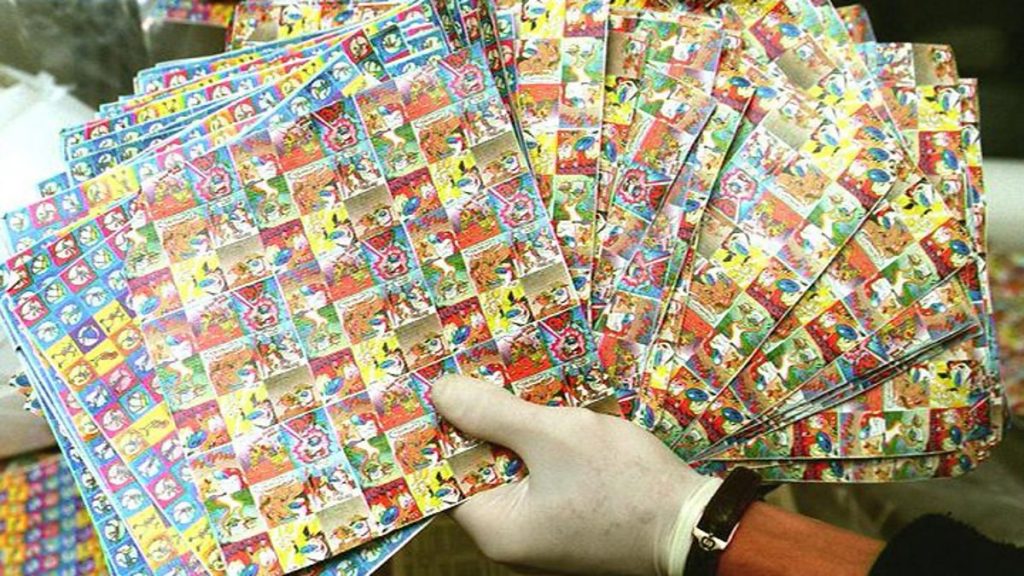
Blotter paper is highly absorbent and can hold small, evenly distributed amounts of liquid LSD. Sheets could be divided into individual squares, each intended to contain a similar amount of the compound. Over time, blotters became visually distinctive, often printed with colorful designs, symbols, or artwork. These visuals became part of LSD’s cultural identity, especially during the psychedelic era.
Despite its popularity, blotter paper had notable limitations. Paper offered little protection from environmental factors, and potency could degrade quickly if exposed to moisture, heat, or light. Uneven absorption during production could also lead to variability between individual tabs. These issues eventually motivated experimentation with alternative materials.
Early Experiments With Alternative LSD Formats
As LSD use continued into the late 20th century, producers and users alike explored different ways to improve consistency and longevity. Sugar cubes, tablets, and gelatin-based carriers all appeared at various points, each with its own advantages and drawbacks.
Gelatin, in particular, attracted interest because of its ability to suspend substances evenly within a solid matrix. Unlike paper, gelatin could encapsulate LSD more thoroughly, offering slightly greater protection from environmental exposure. Gelatin-based forms also allowed for uniform shaping and sizing, which supported more consistent distribution when produced carefully.
These early gelatin experiments laid the groundwork for what would later become known as LSD gel tabs, and reviewing LSD gel tabs available here highlights how modern forms achieve consistent potency and reliable dosing.
The Emergence of LSD Gel Tabs
LSD gel tabs began appearing more prominently in the late 1980s and 1990s. They were typically made from gelatin or gelatin-like materials and molded into small squares or shapes. Many were translucent or lightly colored. LSD was mixed into the gelatin while liquid, then allowed to set, which was believed to distribute the compound more evenly throughout each tab.
One of the main appeals of gel tabs was their perceived consistency. Because LSD was suspended within the gelatin rather than absorbed onto paper, many users believed potency was more uniform from piece to piece. Gelatin also offered slightly better resistance to humidity than blotter paper. However, it remained sensitive to heat and light.
Gel tabs also marked a cultural shift away from heavily visual blotter art. While some gel tabs featured color or simple shapes, most were more minimal in appearance. This reflected changing aesthetics and attitudes within psychedelic culture.
Cultural and Practical Factors Behind Gel Tab Adoption
The adoption of gel tabs was influenced by both practical concerns and cultural trends. As psychedelic use moved further underground, discretion and durability became more important. Gel tabs were compact, easy to store, and less likely to degrade quickly under suboptimal conditions.
At the same time, conversations around consistency and predictability became more prominent. Experiences with uneven blotters led to growing interest in formats perceived as more reliable. Whether or not gel tabs consistently delivered on that expectation, the perception itself played a significant role in their growing popularity, and exploring LSD gel tabs available on our site illustrates how modern users access these forms safely and reliably.
Gel tabs also became associated with later generations of LSD users, distinct from the iconic imagery of the 1960s. This generational shift contributed to their identity as a more “modern” form of LSD.
Gel Tabs in the Context of Modern LSD Use
Today, LSD gel tabs exist alongside blotter paper, liquid drops, and other less common formats. Their presence reflects the ongoing evolution of how psychedelics are prepared and understood. While the active compound remains the same, the medium influences storage, handling, and user expectations.
Importantly, gel tabs do not represent a fundamentally different substance, but rather a continuation of experimentation with delivery methods. Their history illustrates how material science, cultural values, and practical constraints intersect in the world of psychedelics.
Legal and Historical Context
From a legal standpoint, LSD has remained a controlled substance in many countries since the late 20th century, regardless of format. Gel tabs, blotters, and liquid LSD are treated identically under most legal frameworks. Historically, shifts in format have not altered legal status, but they have influenced enforcement patterns and public perception.
Internationally, the history of LSD formats mirrors broader global trends in psychedelic use, prohibition, and renewed academic interest. While research into psychedelics has re-emerged in recent decades, historical formats like blotters and gel tabs remain artifacts of earlier, informal distribution networks rather than modern clinical research.
Conclusion
The history of LSD gel tabs is inseparable from the broader story of LSD itself. Early forms ranged from laboratory liquids to iconic blotter paper. Eventually, gelatin-based tabs emerged, each format responding to specific challenges and cultural moments.
Gel tabs were created to address stability and consistency issues. They also reflect changing aesthetics and priorities within psychedelic communities.
By tracing the origins of gel tabs, it becomes clear that they are not a departure from LSD’s past. Instead, they continue its ongoing evolution. Understanding this history provides valuable context for discussions about modern LSD forms. Changes in medium often reveal as much about culture and practicality as they do about the substance itself. For individuals deeply and genuinely curious about where to securely and responsibly buy LSD Blotters and LSD Gel Tabs online in the safest, most ethical, and fully informed manner possible, see our LSD Blotters and LSD Gel Tabs product page for details.