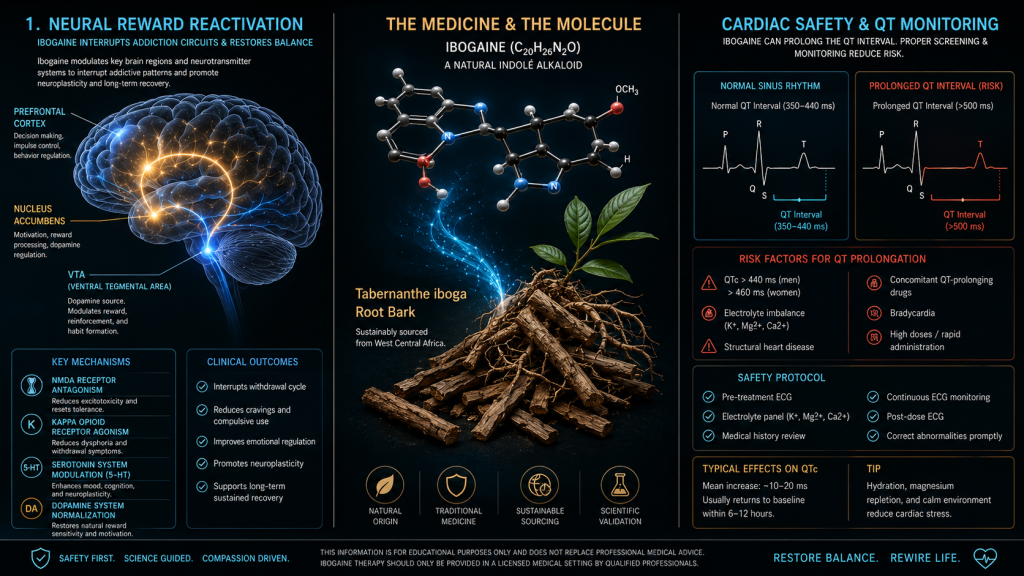
Welcome to our comprehensive guide detailing ibogaine addiction interruption mechanics risks aftercare for addiction. The complex nature of neurochemical dependence requires innovative approaches, and the powerful alkaloid profile derived from the Tabernanthe iboga shrub presents a singular mechanism of action. Ibogaine therapy has emerged as a disruptive treatment modality, challenging standard addiction protocols through rapid neuroplasticity modification. For those exploring profound cellular transformation, understanding how this compound addresses both physical withdrawal and psycho-spiritual processing is critical.
Navigating this terrain requires deep awareness of cellular mechanics and rigid cardiovascular protocols. Consequently, this therapeutic pathway must be viewed as a precise intervention, not a passive experience.
In this guide, we will break down the precise cellular mechanics of ibogaine, analyze vital cardiovascular risk protocols, explore the foundational role of Iboga Root Bark, examine evolving legal frameworks, and provide an evidence-based roadmap for essential psychological aftercare.
⏱️ Quick Summary: The Ibogaine Paradox
Mechanism: Ibogaine utilizes direct GDNF upregulation and multi-receptor modulation to erase withdrawal symptoms and reset neurological reward pathways.
Primary Risks: It possesses significant cardiac risks (QT prolongation); accurate medical screening for heart condition abnormalities is mandatory.
Success Factors: A successful outcome is entirely dependent on rigid integration, setting, and long-term behavioral reprogramming immediately following treatment.
1. The Cellular Mechanics: How Ibogaine Interrupts Addiction
To understand ibogaine therapy, one must understand how addiction hijacked the brain’s baseline neurochemistry. Opioid and stimulant dependence fundamentally restructures dopamine reward pathways and receptor density. Consequently, standard detox methods focus purely on detoxification clearance, ignoring the underlying neurological dysregulation. Ibogaine differs significantly by addressing the addiction problem on four distinct, parallel front lines.
A. Multifaceted Receptor Modulation
Instead of targeting a single receptor like buprenorphine (which binds purely to mu-opioid sites), ibogaine is an atypical agonist. It interacts simultaneously across dozens of sites, including NMDA receptors, kappa-opioid receptors, and serotonin sites. This complex “receptor binding profile” prevents withdrawal symptoms by flooding and neutralizing empty receptors that would otherwise cascade into full-blown neurological panic. Therefore, the physical agony associated with severe detox often vanishes within hours.
Furthermore, ibogaine acts as an open-channel blocker at nicotinic acetylcholine receptors, which plays a pivotal role in curbing nicotine, alcohol, and stimulant cravings. By binding to these specific sites, ibogaine attenuates the acute rewarding signaling pathways triggered by habitual substance abuse. Consequently, the brain experiences a hiatus from the constant physiological signal demanding redosing.
Additionally, its activity at kappa-opioid receptors induces the characteristic dreamlike, introspective state associated with treatment. Unlike classical psychedelics that primary act as agonists at 5-HT2A serotonin receptors, ibogaine’s modulation of kappa-opioid receptors allows individuals to review past trauma without triggering an overwhelming sympathetic fight-or-flight response. This unique receptor dynamic creates a psychological safe space to process underlying emotional triggers.
B. GDNF and Neuroplasticity: The Reset Button
The most profound discovery in ibogaine research involves GDNF (Glial Cell-Derived Neurotrophic Factor). Ibogaine induces the massive upregulation of GDNF in the ventral tegmental area (VTA), the heart of the reward circuit. Think of GDNF as a “reformatting tool” for your dopamine system. For instance, when GDNF spikes, it actively reverses the volumetric shrinking of dopamine neurons caused by long-term abuse. This process resets dopamine receptor density toward a pre-addiction state. Overall, this neuroplastic surge eliminates post-acute withdrawal syndrome (PAWS) and erases cravings instantly.
Moreover, GDNF expression stimulates sprouting of new dopaminergic axonal terminals, enhancing neuronal survival and communication across brain regions damaged by chronic substance exposure. This cellular restoration helps bridge the gap between acute detox and sustained neurological recovery. As a result, the brain regains its capacity to synthesize and process natural dopamine signaling from everyday rewards, such as exercise, food, and human connection.
Consequently, patients often report feeling a baseline sense of emotional stabilization within days of administration. This neurological blank slate provides individuals with a unique window of opportunity to build brand-new behavioral habits before old cravings re-emerge.
C. Noribogaine: The Persistent Metabolite
After oral ingestion, the liver metabolizes ibogaine via the CYP2D6 enzyme into its primary long-acting metabolite, Noribogaine. Furthermore, Noribogaine is stored in body fat reserves and released slowly into the bloodstream over several weeks. As a persistent serotonin-dopamine reuptake inhibitor and potent mu-opioid receptor partial agonist, it acts like an endogenous antidepressant and non-addictive stabilizer. This continued neurochemical stabilization is vital because it protects the brain during the critical weeks immediately after treatment.
In addition to stabilizing mood, noribogaine exhibits a significantly longer half-life than parent ibogaine, lingering in systemic circulation for up to 1 to 4 weeks depending on individual metabolic profiles. This sustained activity acts as a protective buffer, shielding individuals from acute depressive spikes while their natural neurotransmitter production recovers.
Furthermore, because noribogaine maintains moderate affinity for opioid receptors without causing euphoria or physical dependence, it effectively prevents late-onset physical rebound cravings. Therefore, the metabolic conversion of ibogaine into noribogaine is considered a mandatory component of successful long-term addiction interruption.
D. Psychological Processing and Insight
Finally, ibogaine therapy induces a powerful, 24 to 36-hour psychological experience. Users often report visiting repressed traumatic memories and gaining radical new perspectives on the root causes of their self-destructive behaviors. For example, ibogaine helps disconnect the acute distress signal from old trauma. When viewed through this calm, diagnostic mental lens, users often dismantle the emotional drivers of addiction. This deep therapeutic insight provides the essential mental blueprint required for subsequent behavior modification.
This psychological journey usually unfolds in three distinct phases:
The Visual Phase (0 to 8 Hours): Characterized by rapid visual imagery, dreamlike retrospectives of past life events, and direct encounters with emotional triggers.
The Cognitive Phase (8 to 20 Hours): The visual imagery fades, allowing deep intellectual evaluation, emotional integration, and reconciliation of personal relationships.
The Residual Phase (20 to 36 Hours): The brain processes the intense mental material while physical motor coordination gradually returns to baseline.
2. Navigating the Risks: Mandatory Medical Protocols and Regulatory Status
Despite its massive potential, ibogaine therapy possesses distinct and severe physiological risks. When ingested, it alters cardiac function significantly. Therefore, accurate medical oversight during the entire experience is an ethical and safety imperative.
Critical Risk Factors
QT Prolongation (Heart Rhythm): The single greatest danger is QT prolongation, meaning ibogaine increases the interval of the electrical pulse in the heart. Specifically, it blocks potassium channels in cardiac tissue. If not managed properly, this can cascade into a fatal arrhythmia known as Torsades de Pointes. As a result, anyone with preexisting heart conditions is medically disqualified.
Pre-Screening: Before initiating treatment, mandatory pre-screening including a 12-lead ECG (Electrocardiogram), metabolic blood panels, and a full cardiovascular history must be performed. For this reason, therapeutic settings must utilize real-time continuous telemetry medical monitoring.
Electrolyte Management: Serum potassium and magnesium levels directly modulate cardiac repolarization. Hypokalemia or hypomagnesemia dramatically increases the risk of fatal cardiac events during treatment. Therefore, clinicians must test and optimize electrolyte levels prior to administration.
Bradycardia: Ibogaine stimulates the vagus nerve, causing a pronounced slowing of heart rate (bradycardia). Constant monitoring ensures heart rate remains within safe physiological margins throughout the experience.
Liver Function: While it clears biological markers, severe liver damage can interfere with metabolizing noribogaine effectively. Consequently, comprehensive liver function panels must be conducted beforehand.
Evolving Legal Access
Understanding legislative access pathways helps clarify how patients navigate treatment access globally. To explore recent legislative shifts, institutional research, and compassionate access frameworks, read our analysis on Iboga Root Bark and the Right to Try Act: 2026’s Addiction Reset.
All ibogaine therapy traces back to its natural botanical origin: Iboga Root Bark. Understanding this raw material provides crucial context for therapeutic application.
Understanding the Raw Botanical
Iboga Root Bark: The authentic, unrefined outer root bark harvested from the Tabernanthe iboga plant. It contains the complete, natural matrix of iboga alkaloids alongside organic plant matter.
Alkaloid Profile: Raw root bark typically features a total alkaloid concentration ranging from 2% to 6%. Beyond ibogaine, it contains secondary alkaloids such as ibogamine, ibogaline, tabernanthine, and voacangine, which act synergistically in traditional contexts.
Traditional Context vs. Clinical Isolation: In traditional Bwiti spiritual practices, raw root bark is consumed in bulk ground powder for rites of passage. However, in modern clinical detoxification protocols, isolated chemical extractions are often preferred because raw bark volume can induce heavy gastrointestinal strain and unpredictable dosing due to natural alkaloid variations between harvests.
Precision Considerations: Because natural plant material varies in density from batch to batch, accurate titration and dosage calibration require careful attention during preparation.
4. Metabolic Clearance Timelines Before Treatment
Safety requires ensuring that all contraindicated substances are completely cleared from the system prior to ibogaine ingestion. Mixing active pharmaceutical drugs with ibogaine can result in severe adverse interactions, toxic potentiations, or death.
Short-Acting Opioids (Heroin, Oxycodone): Requires a minimum washout period of 24 to 48 hours. Primary risk if combined includes acute respiratory depression and cardiac distress.
Long-Acting Opioids (Methadone, Buprenorphine): Requires a minimum washout period of 14 to 30 days, switching to short-acting opioids first under medical guidance. Primary risk if combined includes severe acute withdrawal onset and fatal arrhythmia.
SSRIs and SNRIs (Antidepressants): Requires a minimum washout period of 14 to 30 days (Fluoxetine requires 5 or more weeks). Primary risk if combined includes Serotonin Syndrome and severe cardiac risk.
Benzodiazepines: Requires a careful medical taper prior to treatment. Primary risk if combined includes life-threatening seizure risk during detox.
Stimulants (Cocaine, Amphetamines): Requires a minimum washout period of 7 to 14 days. Primary risk if combined includes extreme cardiovascular strain and hypertensive crisis.
5. The Critical Component: Comprehensive Psychological Aftercare
Understand this crucial truth: Ibogaine interrupts addiction; it does not “cure” it. Its job is neurochemical stabilization. Overall success is determined in the weeks and months immediately following the cellular reset.
Aftercare Principles
The Neuroplastic Window: Following treatment, the brain enters a highly sensitive, malleable neuroplastic window, sometimes called “The Gray Day Phase.” While physically stable, your mind is open to rapid learning and behavioral changes. Therefore, integration must be aggressive, deliberate, and sustained during this period.
Radical Behavioral Change: If you return to the exact same environment, stressors, and relationships that drove your addiction without new internal frameworks, relapse is virtually guaranteed. Aftercare is about building a completely new life on that new neurological foundation.
Therapeutic Integration: Working with an experienced integration coach or psychotherapist specialized in psychedelic aftercare is essential. Weekly sessions help translate abstract visions and insights into concrete, actionable daily habits.
Somatic and Bodywork Therapies: Trauma is frequently stored physically in the nervous system. Implementing somatic experiencing, acupuncture, breathwork, and regular physical activity helps ground the newly recalibrated nervous system.
6. Ibogaine for Psychological Healing (Non-Detox Settings)
While highly targeted at opioid dependence, ibogaine therapy is increasingly utilized for treatment-resistant depression, severe PTSD, traumatic brain injury (TBI) in military veterans, and existential exploration. In non-detox scenarios, different protocols apply.
Non-Detox Protocols
Ego Dissolution: Deep insight gained from the 30-hour psychological processing helps dismantle entrenched self-limiting thought patterns and negative self-talk.
Trauma Processing: By dampening amygdala hyperactivity while maintaining conscious awareness, individuals can process deeply buried traumatic memories without re-traumatization.
The Reset Factor: The profound perspective change often resets mood baseline and addresses the root drivers of depression.
Precise Dosing: Doses in non-detox settings are typically moderate and do not aim for physical suppression. Lower doses of Iboga Root Bark are often explored in spiritual or micro-dosing frameworks to support cognitive reflection without the heavy physiological toll of full clinical detox.
Frequently Asked Questions
How does ibogaine stop opioid withdrawal?
Ibogaine works as an “atypical agonist.” It simultaneously targets numerous neurotransmitter receptors, NMDA receptors, and sodium/potassium channels. This complex receptor profile floods the sites opioid receptors were activating, effectively neutralizing the entire withdrawal cascade at a neurological level.
What is Iboga Root Bark?
Iboga Root Bark is the raw, unrefined outer root material of the Tabernanthe iboga shrub. It contains the naturally occurring complex of alkaloids, including ibogaine, ibogamine, and ibogaline.
Why is an ECG mandatory before taking ibogaine?
Ibogaine slows heart rate and prolongs the heart’s QT interval by blocking cardiac potassium channels. An ECG screens for pre-existing cardiac conditions or arrhythmia risks that could cause fatal cardiac events during treatment.
Can I take ibogaine microdoses while using opioids?
Never mix full-agonist opioids with ibogaine of any dose. Ibogaine potentiates other substances severely. This combination can lead to opioid overdose because the alkaloid blocks the breakdown of opioids while simultaneously preventing withdrawal, creating massive cardiovascular and CNS risks.
How long does the active psychological phase of ibogaine last?
The full experience typically lasts between 24 and 36 hours. The acute dreamlike visual phase lasts 6 to 8 hours, followed by 12 to 20 hours of deep cognitive evaluation and a residual recovery period.
Conclusion: The Ultimate Physiological Opportunity
Understanding ibogaine addiction interruption mechanics risks aftercare reveals why this alkaloid represents the single most potent detoxification agent in neurobiology. By scientifically understanding how ibogaine upregulates GDNF and multi-modulates receptors, you gain cellular command. However, true success is entirely dependent on rigid medical safety during the experience and relentless behavioral re-patterning immediately afterward. Ibogaine provides the neurological reset; you must build the foundation of your new life on that pristine platform.
Are you ready to explore accurate data, clinical perspectives, and verified educational materials for neurochemical resetting? Visit PsychedelicSphere today to explore our central resource on Iboga Root Bark and advanced addiction science.